Introduction
My concentration work (and it’s influence on the months following) has been the most inspiring and creative time of my graduate career. One of my main research areas is listening which, as I have come to understand from the existing literature (in Rhetoric and Writing as well as Digital Rhetoric and Professional Writing), is a process that requires turning both inward and outward. As I will show, the concentration coursework has helped change the way I relate to myself and others.
My concentration coursework consisted of three classes: WRA 890: Learning Web Development Languages: A Critical Code Perspective, WRA 860: Visual Rhetoric for Professional Writing, and WRA 841: Professional Writing Theory and Research. The projects discussed here are from WRA 860 and WRA 841, as these projects best express the knowledge, wisdom, and skills that I’ve gained from the concentration. These projects also connect with my experience in WRA 890, which I will explore briefly.
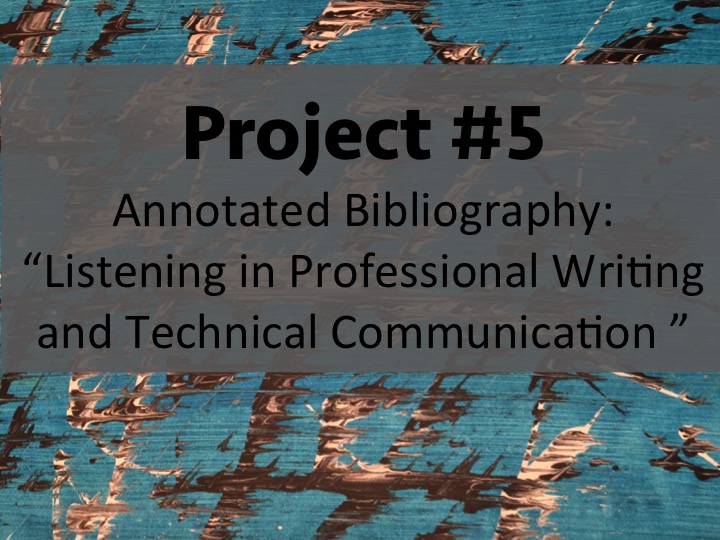
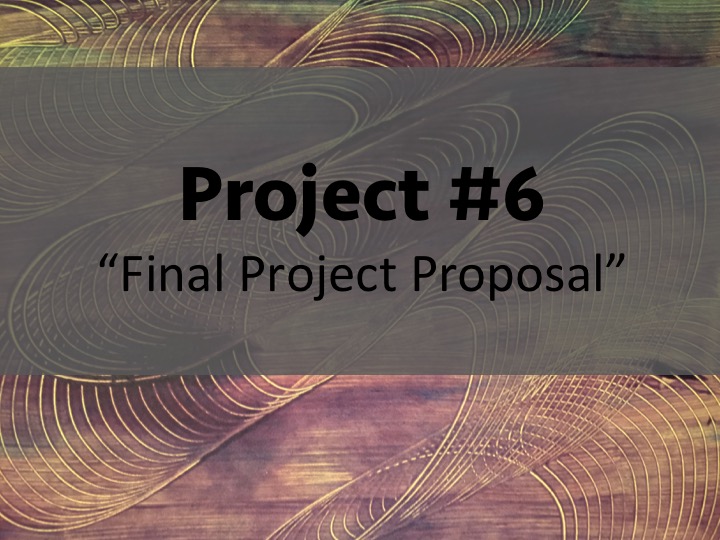
The first project, “Images: Identity and Embodiment,” reflects primarily on my own identity in the academy. It explores how I understand my own positionality, as well as how my positionality (and that of others) is read and informed by academia as an institution. The second project, “Video: Identity Fusion of Horizons,” looks at these same themes, but through a more “zoomed in” perspective. Using the affordances of video as a medium, it highlights the emotional dimensions of the interplay (and sometimes tension) between the personal and the social. Through narrative, it further contrasts different personal and social orientations. The third project, “Interview: Communication for Change,” similarly touches on different orientations to self and others, but examines how these look in a variety of workplaces and rhetorical situations. This interview with a self-identified social change agent with 60+ years of work experience, touches on themes of leadership and social justice. The fourth project, “Networking Memo Reflection,” asks how I might utilize my own social networks to effect change. The fifth project, “Annotated Bibliography: Listening in Professional Writing and Technical Communication,” much like the annotated bibliography required for the concentration exam, asks how the discipline currently views listening. The sixth project, “Final Project Proposal,” represents an early reflection on how I might synthesize the lessons learned from the concentration, going forward with a community-oriented project.
One of the most valuable concepts I’ve gained from the concentration is that of recognizing that designs are always rhetorical; that is, they invite viewers to interact with compositions in particular ways (Hocks, 2003). I’ve thus organized my portfolio in a way that allows for the projects to be viewed in tandem with my reflective essay. While I’ve assigned each project a number, they need not be visited in numerical order. Whatever order you choose to view the projects in, I hope the navigation system serves as a reminder that, like my learning process, each reflection draws upon and replies to others.
You’ll notice that each project link below has a piece of artwork behind it. As Bolter and Grusin (2000) argue, media—like photography– “function as objects within the world—within systems of linguistic cultural, social, and economic exchange” (58). Mindful of the way that images are tied to these contexts, I chose to include pieces of art.
These images have multiple layers of meaning, one of which connects to the story about how I obtained the art. I purchased them at the recent 2018 Cultural Rhetorics Conference in the “Maker Space,” an area that facilitates the practice of cultural rhetorics. In the process, I got to know Bonita L. Bent, the artist who created the images below. (Items purchased, digitally captured, and shared with permission; learn more about her technique and her work here). I used the Maker Space to learn about participants’ various intercultural practices, including the focus of my own table, which stressed interdisciplinary and intercultural listening practices.
While I’ve participated in previous cultural rhetorics conferences, this particular conference was especially meaningful to me because of how much I was able to connect my work, my identities, and my stories with those of others. I did so through active participation, including sharing and listening to stories while doing quillwork with Boni. As both my portfolio reflection and annotated bibliography/essay indicate, meaningful change happens through both participation and relationships. For me, these images are thus tied to an experience that represented an exciting chance to engage in a kind of experiential composition informed by listening. My portfolio, too, represents practices informed by listening—to scholars, colleagues, family, friends, and strangers, and to the environment (since much of my work is created outdoors), and to myself.
The pieces of art that I’ve used as background images for the project links speak deeply to me. They are non-linear, messy, and at times fractal-like. Some are also cyclical. They are also extremely diverse in color and pattern. They are metaphors for my design and learning processes and they are art. I connect to my work as a kind of artist whose palette is at times made up of visual elements, and at others of perspectives and stories. I feel that like art, some of my pieces are particularly emotionally evocative because they tell my own stories and those of others, particularly project #1 (Images: “Identity and Embodiment”), project #2 (Video: “Identity Fusion of Horizons”), and project #3 (“Interview: Communication for Change”).